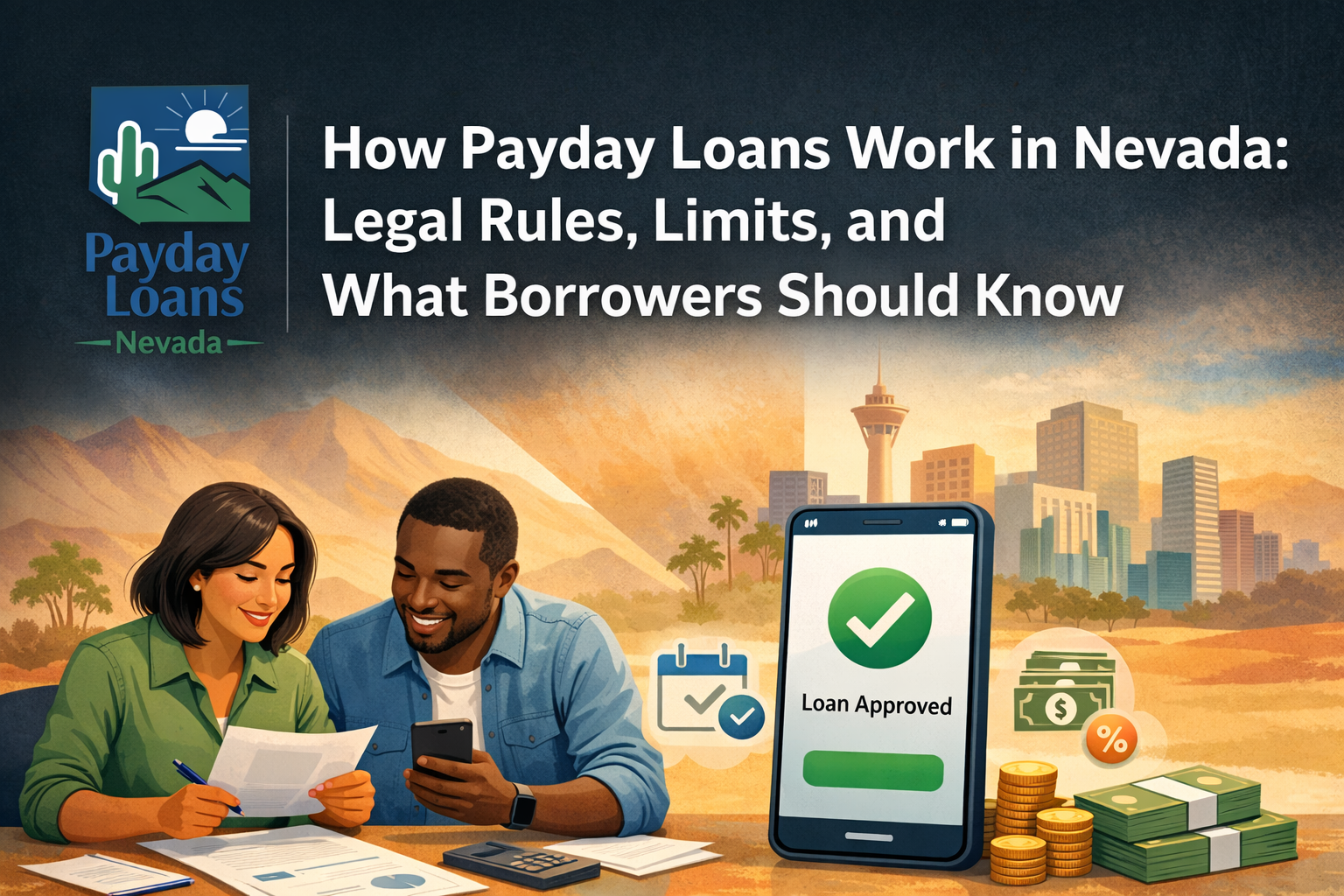
When money runs short and bills don’t wait, many Nevada residents start looking for fast financial relief. Payday loans often enter the conversation—but confusion around legality, limits, and repayment can make an already stressful situation worse.
Nevada’s payday loan laws differ from those in many other states. Understanding how these loans actually work before applying can help you make a more informed and responsible decision.
This guide explains how payday loans work in Nevada, what the law allows, and what borrowers should realistically expect.
What Is a Payday Loan in Nevada?
A payday loan is a short-term loan designed to cover immediate expenses until your next paycheck. In Nevada, these loans are legal and regulated, but they come with important responsibilities for borrowers.
Key characteristics of payday loans
- Short repayment timelines, often tied to your pay cycle
- Smaller loan amounts compared to traditional loans
- Higher fees due to the short-term nature of the loan
When exploring payday loans in Nevada, it’s essential to focus on repayment ability—not just speed or convenience.
Are Payday Loans Legal in Nevada?
Yes, payday loans are legal in Nevada. The state allows licensed lenders to offer these loans while requiring clear disclosures and borrower protections.
What Nevada law requires
- Lenders must be licensed to operate in Nevada
- Loan terms, fees, and repayment amounts must be disclosed upfront
- Borrowers must receive a written loan agreement
Understanding Nevada payday loan laws helps borrowers identify legitimate lenders and avoid unexpected costs.
How Much Can You Borrow and What Does It Cost?
Nevada does not impose a fixed cap on payday loan amounts. Instead, lenders assess loan size based on income and repayment ability.
Costs may include
- Finance charges or loan fees disclosed before approval
- No hidden fees when working with licensed lenders
- A clearly stated total repayment amount
Payday loans provide fast access to funds, but they are intended for short-term use—not ongoing financial gaps.
How Repayment Works in Nevada
Most payday loans are due in full on your next payday. Some lenders may offer extended payment options, but terms vary.
Before accepting a loan, ask
- When exactly is repayment due?
- What happens if repayment is delayed?
- Are extensions or payment plans available?
Responsible lenders explain these details clearly and without pressure.
When Payday Loans May (and May Not) Make Sense
Payday loans can help in specific situations, but they are not a universal solution.
They may be appropriate for
- One-time, urgent expenses
- Borrowers with a clear repayment plan
They may not be ideal if
- You are already managing multiple debts
- Repayment would strain essential expenses
Comparing payday loans with other short-term loan options can help you choose responsibly.
Conclusion
Payday loans in Nevada are legal, accessible, and fast—but they require careful consideration. Understanding the rules, costs, and repayment expectations gives you more control during financial stress.
Before moving forward, review your options, read the terms carefully, and choose a solution that supports your financial stability.
Frequently Asked Questions
Are payday loans legal in Nevada?
Yes, payday loans are legal in Nevada when offered by licensed lenders.
How fast can I receive a payday loan?
Funding timelines vary, but many lenders offer same-day or next-day access.
Is there a borrowing limit in Nevada?
Nevada does not set a fixed cap, but lenders assess borrowing based on income.
What happens if I can’t repay on time?
Fees may apply, and some lenders offer extensions. Always confirm terms upfront.
Are there alternatives to payday loans?
Yes. Installment loans and other emergency options may be available.

About the Author
Written by a Senior Fintech Content Specialist
This article was written by a seasoned fintech content writer and consumer finance educator with extensive experience covering U.S. short-term lending regulations, Nevada payday loan laws, and responsible borrowing practices.
The focus is on clear, accurate, and consumer-first financial education—helping readers understand their options, risks, and responsibilities before making borrowing decisions.